 LvXing Hinges
1. The Industrial Advantages of China's Hinge Factories
Southern China, and specifically the Foshan industrial cluster, has built a highly integrated ecosystem for architectural hardware manufacturing. For global buyers seeking custom door and window hinges, sourcing from a specialized Chinese factory like LvXing provides several key advantages:
- Complete Supply Chain Integration: Within a 50-kilometer radius of our Foshan facility, we source premium primary aluminum ingots, high-purity alloy additives, custom tooling, surface treatment services (including architectural-grade anodizing and PVDF coating), and heavy-duty packaging materials. This proximity reduces material transit times and lowers logistics costs.
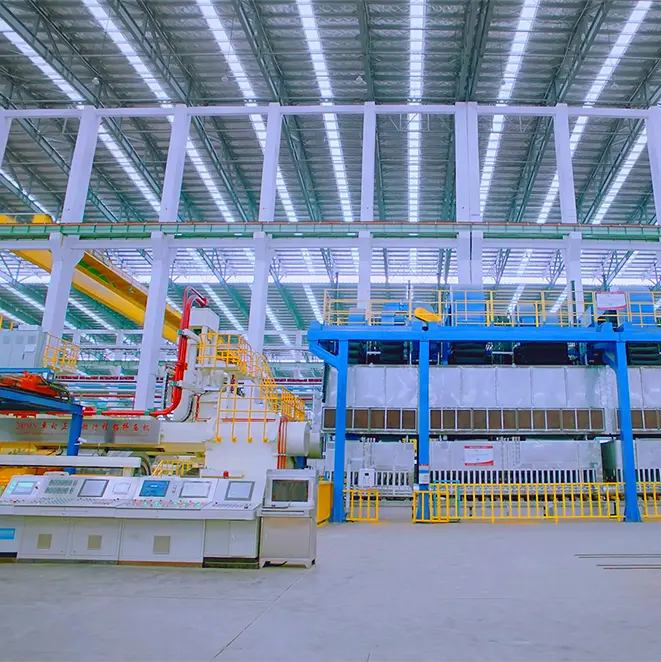
- Advanced Scale Capabilities: Operating heavy extrusion machinery ranging from 800T to 20,000T allows us to process high-strength structural alloys, such as 6005A-T6 and 6061-T6. These alloys are often required for oversized commercial entrance doors and high-wind-load glazing systems, and are difficult to manufacture on standard, lower-tonnage extrusion lines.
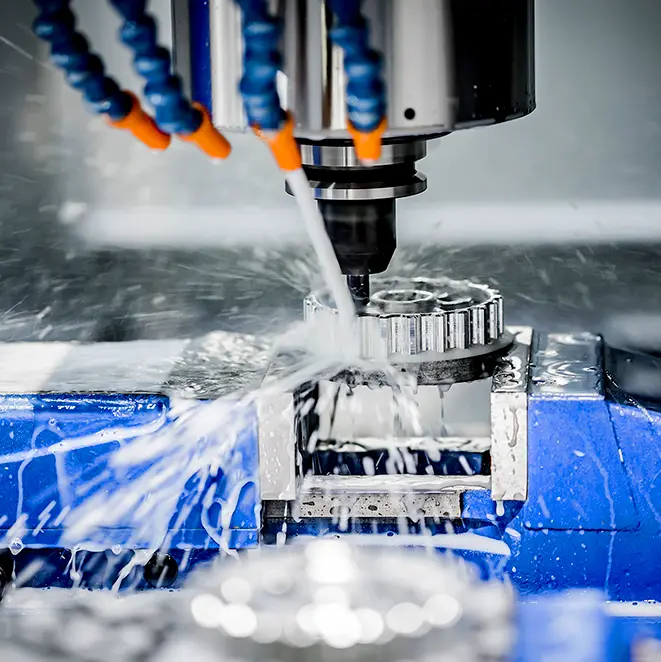
- Precision Tooling & Toolmaking: Our in-house die design and manufacturing capability allows us to maintain tight tolerances (up to ±0.1mm on complex hinge profiles). This level of precision is necessary to prevent premature wear and squeaking in continuous geared hinge assemblies.
2. Technical & Architectural Hardware Trends
Modern architectural design is shifting toward larger, heavier glazed openings, higher thermal performance, and low-maintenance construction materials. This shift has driven the following technical trends in door and window hinge manufacturing:
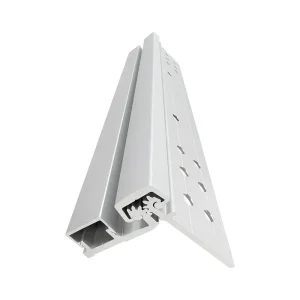
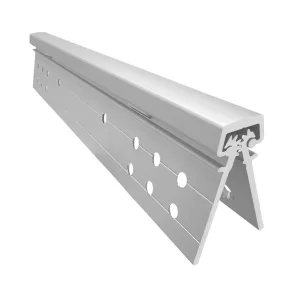
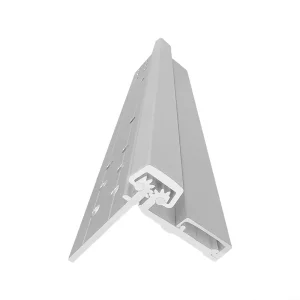
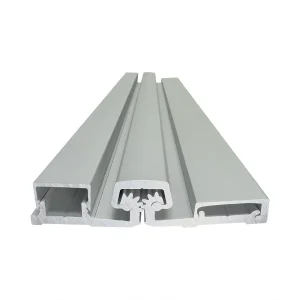
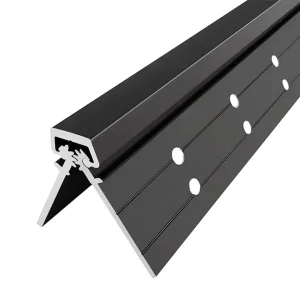
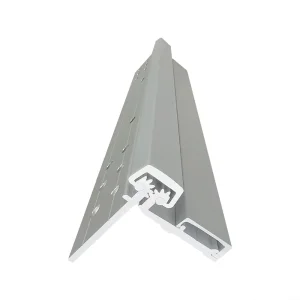
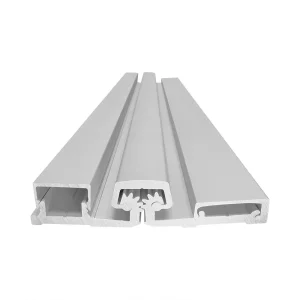
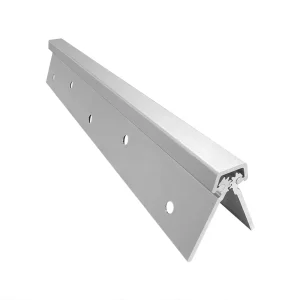
- Continuous Geared Design: Traditional butt hinges concentrate the door's weight on two or three localized points along the frame. Continuous geared hinges, in contrast, distribute the load along the entire height of the door and frame. This reduces stress on both the door closer and the frame structure, making it a preferred choice for high-traffic environments.
- Sustainable Materials: Commercial builders are increasingly selecting fully recyclable architectural alloys (like the 6xxx series aluminum) to meet green building certifications such as LEED and BREEAM. Anodizing finishes are also preferred over traditional plating processes due to their lower environmental impact and superior UV resistance.
- Integration with Access Control: Smart buildings increasingly require concealed power transfer prep within geared hinges. This allows electronic locks, card readers, and exit devices to be powered reliably through the hinge centerline without exposing wiring.
3. Practical Application Scenarios & Engineering Challenges
Understanding the field conditions that hardware must withstand is critical to designing reliable systems. Below are three common application scenarios for our continuous geared hinges:
- High-Traffic Commercial Entrances (Schools & Hospitals): Entrance doors in public facilities can undergo millions of open-close cycles. Standard hinges can wear down, leading to door sag and alignment issues. Our geared hinges use self-lubricating bearings and heavy-duty geared profiles to distribute lateral force evenly, maintaining door alignment and preventing pinch hazards.
- Corrosive Coastal Developments: Wind-borne salt and high humidity can rapidly corrode standard steel hardware. For coastal projects, we utilize 6063-T6 aluminum combined with a minimum 15-micron class-I anodized oxide film to provide long-term protection against pitting and galvanic corrosion.
- Heavy Industrial & Military Facilities: Heavy-duty blast doors, thick acoustic panels, and large-format glazed windows require hinges capable of supporting loads up to 1,000 lbs. Our high-tonnage extrusion process allows us to manufacture thick-walled profiles that resist shear deformation under high loads.
4. Macro-Level Architectural Engineering Solutions
Architects and façade engineers face the challenge of coordinating structural load requirements, wind pressure ratings, and thermal movements. LvXing works alongside design teams to provide engineered solutions that address these challenges:
- Wind Load Engineering: High-rise unitized curtain walls experience significant wind loads. Our custom-extruded structural hinges are designed and simulated using Finite Element Analysis (FEA) to ensure they withstand both positive and negative wind pressures.
- Thermal Expansion Compensation: Long continuous hinges installed on exterior aluminum framing are subject to expansion and contraction cycles. Our engineering team calculates the required expansion gaps and designs custom slip joints to prevent buckling and binding.
- Universal Profile Retrofitting: In renovation projects, older wood or hollow metal doors may not align with modern frame dimensions. We design custom offset templates to allow geared hinges to fit older frames without requiring a full structural replacement.
5. Global Procurement Requirements & Quality Assurance
Procuring custom hardware from overseas requires clear communication, verified quality standards, and reliable logistics planning. To ensure project success, we focus on the following key metrics:
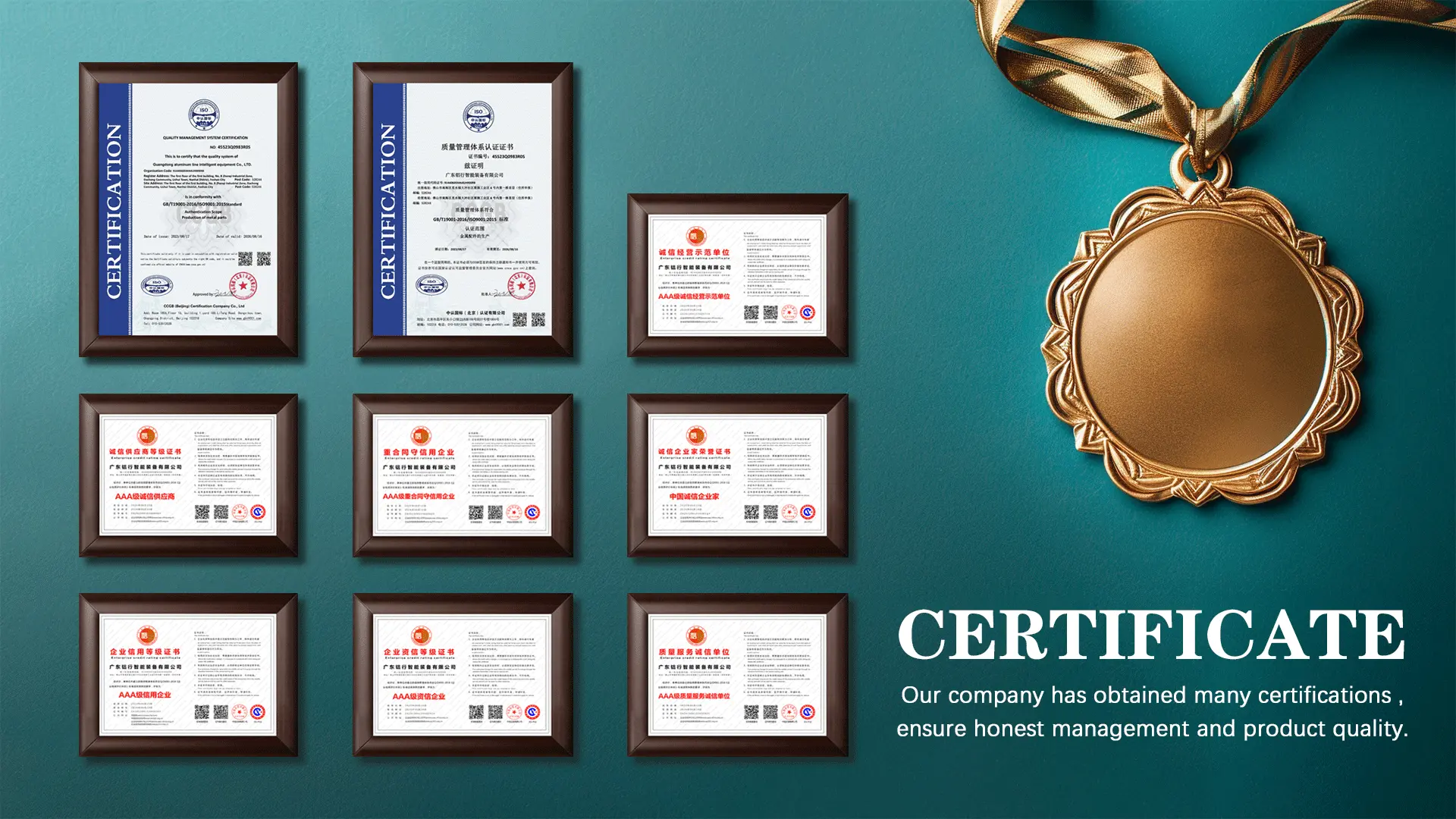
- Regulatory Compliance & Testing: Our products are certified under ISO9001:2015 and can be manufactured to meet CE certification guidelines. We also perform cyclic load and salt-spray testing based on ASTM standards.
- Packaging and Shipping Integrity: Long-profile extrusions (up to 28 meters) are susceptible to bending during ocean transport. We utilize rigid steel frame packaging, protective foam interleaving, and heavy moisture-resistant barrier wraps to ensure products arrive flat and undamaged.
- Full Material Traceability: Every batch of aluminum is shipped with mill test certificates (MTC) detailing the exact chemical composition and mechanical properties, confirming the quality of the alloy used.